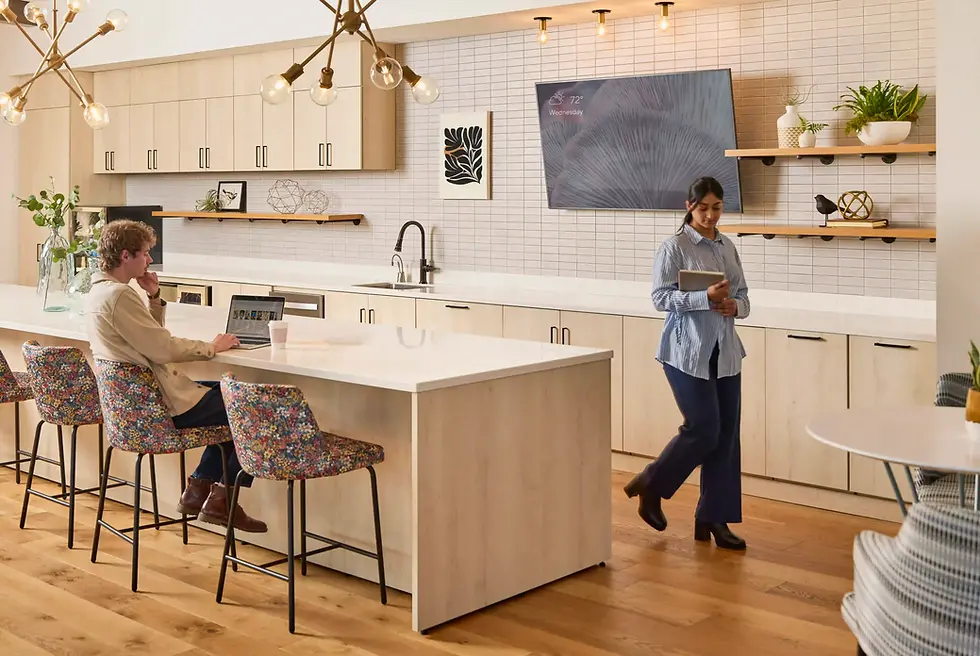
The Human-Centered Design Process: Creating Comfortable and Productive Workspaces in Dallas–Fort Worth
Updated: Sep 9

For business owners, C-level executives, real estate professionals, and architects leading commercial projects in the Dallas–Fort Worth metroplex, decisions around office interiors extend far beyond visual appeal. Workplace design has become a strategic investment in productivity, employee experience, and long-term operational value.
Today’s offices must function as purposeful environments that support how people actually work. This shift has led many organizations to adopt a human-centered design process, an approach that places people—rather than square footage or furniture counts—at the center of workplace planning.
Interior Resources Group (IRG) supports this approach through commercial furniture solutions, space planning, and project coordination for large-scale B2B environments. By focusing on human-centered design, IRG helps organizations create workplaces that balance comfort, performance, and adaptability without overpromising or relying on trends alone.
Why Human-Centered Design Matters in the Modern Workplace?
The expectations placed on commercial office environments have changed significantly. Hybrid work models, evolving team structures, and increased emphasis on employee well-being have reshaped how organizations think about space.
A human-centered workplace prioritizes:
Comfort that supports long hours of focused work
Layouts that accommodate collaboration without distraction
Furniture and architectural elements that adapt over time
Rather than designing around static floor plans, this approach emphasizes understanding how people move, focus, and interact within the space. For organizations investing in new commercial furniture and interior systems, this perspective helps ensure that design decisions deliver long-term value.
Understanding People Before Designing Space
Human-centered design begins with observation and listening. Before layouts are finalized or products are specified, it’s critical to understand how employees actually use their environment.
This stage focuses on identifying:
How different teams work throughout the day
Where privacy is needed versus where collaboration naturally occurs
Common challenges related to noise, ergonomics, or storage
For facilities managers and corporate decision-makers, this means looking beyond headcount to daily workflows. The goal is not to fill space, but to design environments that support real behaviors and job functions.
Insights gathered at this stage inform smarter decisions around office space planning, furniture systems, and architectural elements that align with actual needs rather than assumptions.
Translating Insight into Workplace Strategy
Once user needs are clearly understood, those insights are translated into a workplace strategy. This is where planning decisions take shape—how space is allocated, how teams are supported, and how flexibility is built into the environment.
Key considerations often include:
Privacy and Focus
Open environments can support collaboration, but they also increase the need for quiet zones. Strategic use of demountable glass walls, phone booths, and enclosed meeting areas helps balance openness with focus.
Collaboration and Flexibility
Human-centered workplaces incorporate a variety of settings—from informal huddle spaces to structured conference rooms—allowing teams to choose the environment that best supports their task.
Comfort and Ergonomics
Furniture selection plays a significant role in long-term comfort. Ergonomic seating, adjustable workstations, and thoughtfully designed support spaces help reduce strain and improve usability across roles.
This strategy-driven approach ensures that furniture and architectural products are selected to support function, not just appearance.
From Plan to Physical Environment
With a clear strategy in place, attention shifts to execution. Translating design intent into a functional workplace requires coordination across planning, logistics, and installation.
For large commercial projects, this stage often includes:
Detailed office space planning to ensure accurate layouts
Coordinated furniture delivery and installation
Integration of architectural products such as demountable walls or acoustic systems
Effective implementation minimizes disruption and ensures the final environment reflects the original design goals. Precision at this stage is critical, particularly for organizations managing complex timelines or occupied spaces.
Measuring How the Space Performs
A human-centered workplace is evaluated by how well it supports the people using it. After occupancy, observation and feedback help determine whether the environment is functioning as intended.
This may include assessing:
Whether focus areas reduce distractions
How collaborative spaces are being used
Whether furniture layouts support movement and comfort
Designing for Change, Not Just Today
Workplace environments are not static. Teams grow, roles shift, and technology changes. Human-centered design accounts for this by emphasizing adaptability over permanence.
Designing for change often involves:
Modular furniture systems that can be reconfigured
Architectural products that allow spaces to evolve without major construction
Planning strategies that support future growth or reorganization
By focusing on flexibility, organizations can extend the lifespan of their workplace investment while remaining responsive to change.
Applying Human-Centered Design Across Commercial Markets
Human-centered principles apply across a wide range of commercial environments, including:
Corporate workplaces
Healthcare facilities
Educational settings
Government and public-sector spaces
Each market presents unique requirements, but the underlying goal remains the same: creating environments that support people in performing their work comfortably and effectively.
IRG works with decision-makers across these sectors throughout the Dallas–Fort Worth area, supporting projects that require thoughtful planning, coordination, and reliable commercial-grade solutions.
Moving Forward with a Human-Centered Approach
The human-centered design process provides a practical framework for organizations seeking to improve how their spaces function—not through trends or assumptions, but through informed planning and execution.
For organizations planning new projects or evaluating existing environments, a people-first approach helps ensure that workplace investments support both current needs and long-term adaptability.
By aligning space planning, furniture selection, and implementation around how people work, human-centered design becomes a strategic tool for creating productive and comfortable commercial environments.
To explore how a human-centered design approach can be applied to your workplace, we invite you to contact our team and begin a thoughtful, strategy-led conversation.