Current furniture trends in K-12 education environments
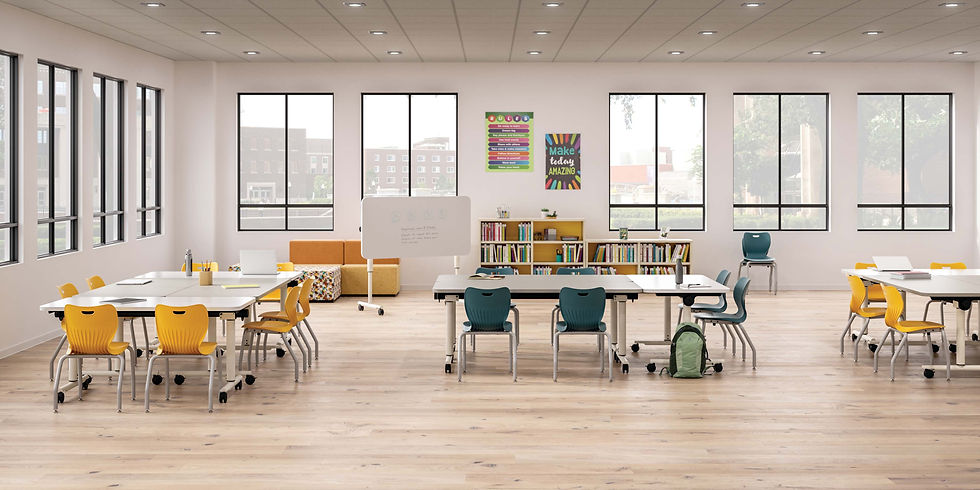
Enter a newly renovated K-12 classroom, and you'll observe a significant change almost everywhere. Furniture is no longer set up for just one teaching method. It's designed for quick transitions, small-group activities, independent focus, project-based learning, and technology-enhanced instruction.
Districts are also considering the same practical questions. How can we maximize the use of the same space? How do we accommodate neurodiversity and accessibility? How can we minimize noise and distractions? How do we keep devices charged without creating a tangle of cords? The solutions are reflected in furniture specifications.
Here are the trends that consistently emerge in current K-12 planning and purchasing discussions from a dealership viewpoint.
Flexible seating that supports choice, not chaos
Flexible seating has matured. The trend is moving away from a random mix of novelty chairs and toward intentional seat variety that supports posture changes, attention needs, and classroom management.
What is Popular Now
Ergonomic student chairs in multiple sizes
Stools and perch seating for quick transitions
Soft seating zones for reading and small group instruction
Standing height options and sit-to-stand choices, especially in upper grades
Why is it Trending
The ability to choose and have control can boost motivation and involvement, which is why numerous educators and organizations continue to emphasize the advantages of flexible seating when it is applied with established guidelines.
Specifications We Are Defining
Uniformity in glides, casters, and seat heights according to grade bands
Establish a seating distribution, such as 60 percent traditional ergonomic chairs and 40 percent alternative choices
Select robust textiles and surfaces that are easy to clean, particularly for soft seating

Modular and mobile furniture for rapid room reconfiguration
The traditional single-teacher front-of-the-room setup is being replaced by multi-modal arrangements. This requires furniture that is easy to move, locks securely, and nests efficiently.
What is Popular Now
Student tables equipped with casters and quick-lock brakes
Trapezoid and wedge tables that can be arranged into circles, pods, and rows
Mobile teacher stations in place of fixed lecterns
Stackable chairs and nesting tables for rapid reconfiguration
Why is it Trending
Active learning environments rely on collaboration and interaction, which are difficult to achieve with stationary, heavy furniture.
Specifications We Are Defining
Assess mobility on the actual flooring types used in the building
Choose casters that are quiet and do not leave marks
Emphasize quick reconfiguration without the need for tools
Active learning setups, more collaboration per square foot
Furniture is chosen to enhance instructional strategies rather than merely accommodate people. There is a noticeable shift towards purpose-built collaboration zones and away from uniform rows.
What is Popular Now
Small group tables designed for 3 to 6 students
Whiteboard surfaces on tables, screens, and mobile partitions
Lightweight student desks that facilitate pairing and clustering
Collaborative seating in libraries, commons, and adjacent hall areas
Why it is Trending
Manufacturers and school design guidelines increasingly view furniture as essential infrastructure for adaptive, student-centered instruction, focusing on active learning and diverse learning modalities.
Specifications We Are Defining
Design sightlines for whole group interactions, even in clustered arrangements
Combine collaboration zones with quiet focus areas to minimize overstimulation
Incorporate mobile dividers where supervision and noise management are important
Built-in power and tech readiness, without the cable clutter
One of the most consistent furniture requests in K -12 is power access that feels invisible. Devices are everywhere, but classrooms still need safe circulation paths and easy supervision.
What is Popular Now
Charging carts and secure device storage with cable management
Tables with integrated power modules or grommets
Mobile charging towers for learning commons and libraries
Teacher station power hubs with locking storage
Specifications We Are Defining
Coordinate with IT and facilities early so furniture and electrical plans match
Specify tamper-resistant outlets where appropriate
Avoid solutions that force cords into walkways

Inclusive and accessible furniture as a baseline expectation
Inclusive design is moving from special purchase to standard spec. Districts want learning spaces that support a wide range of physical, sensory, and attention needs from day one.
What is Popular Now
Adjustable height desks and wheelchair accessible tables
Tilt top work surfaces for fine motor and visual support
Sensory-friendly seating and calm down corners
Variety in seat height and depth, not just one standard chair
Why it is Trending
Universal design principles are increasingly emphasized for school environments, including flexible zones and furniture choices that support diverse learners.
Specifications We Are Defining
Add adjustable pieces in every classroom, not only in specialized rooms
Use consistent, predictable layouts to support wayfinding and routine
Include a quiet space option in elementary classrooms and learning commons
Acoustic comfort, more soft surfaces, and sound-absorbing elements
As classrooms become more collaborative, noise becomes a bigger barrier. Furniture choices are increasingly tied to acoustic outcomes, especially in open-plan areas, learning commons, and cafeterias used for instruction.
What is Popular Now
Upholstered panels and soft seating are used strategically
Acoustic screens between small group zones
Felt, PET, or fabric-wrapped elements integrated into furniture systems
Library furniture layouts that reduce cross-talk
Why it is Trending
Classroom acoustics affect speech clarity and learning conditions, and design guidance continues to emphasize controlling noise and reverberation in education spaces.
Specifications We Are Defining
Pair furniture decisions with ceiling and wall acoustic strategies
In open areas, use screens and soft zones to break up sound paths
Choose textiles that meet durability and cleanability requirements
Health-focused materials and cleanability are designed, not added on
Post-pandemic operational reality still influences furniture selection. Buyers want surfaces that clean easily, fabrics that resist stains, and layouts that support healthy airflow.
What is Popular Now
Non-porous, easy-wipe laminates and solid surface options
Removable seat covers where soft seating is used heavily
Fewer deep crevices and complex seams that trap debris
Layouts that avoid blocking supply and return vents
Why it is Trending
Ventilation is repeatedly cited as a critical component of maintaining healthy environments in schools and childcare settings.
Specifications We Are Defining
Confirm cleaning protocols with custodial leadership before specifying materials
Test disinfectant compatibility on finishes
Avoid furniture that impedes ventilation pathways in compact rooms
Sustainability and lifecycle value, fewer replacements, more refurb options
Sustainability in K-12 furniture is showing up as lifecycle math, not just marketing. Districts want long warranties, replaceable parts, and materials that hold up to real student use.
What is Popular Now
Modular systems with replaceable components
Recycled content fabrics and PET acoustic elements
Neutral palettes that last across refresh cycles
You will also see nature-inspired palettes and materials, aligned with broader biophilic design preferences, showing up in K-12 commons and libraries.
Learning Commons and library modernization, the library as a campus hub
The school library continues to evolve into a learning commons that supports quiet study, tutoring, media creation, and small group collaboration. Furniture is the main lever that makes one room serve all those roles.
What is Popular Now
Zoning with furniture, quiet carrels, collaboration lounges, and small meeting tables
Mobile soft seating clusters that can be reconfigured for events
Integrated media production areas with task seating and acoustic control
Charging friendly high-top tables for quick work sessions
Specifications We Are Defining
Use furniture to define zones without blocking supervision
Mix durable soft seating with hard surface study areas
Plan for after-school use and community events

Makerspaces and STEM labs, furniture built for tools and teamwork
STEM, CTE, and makerspaces demand a different furniture toolkit. Durability and safety matter, but so do collaboration and storage.
What is Popular Now
Height-adjustable workbenches for varied tasks and grade levels
Mobile storage for materials, robotics, and consumables
Lab stools and task chairs designed for longer project sessions
Tables that support prototyping, not only note-taking
Specifications We Are Defining
Prioritize chemical resistance and impact resistance where needed
Specify storage first, clutter kills makerspaces
Include display and showcase surfaces for student projects
FAQ
What is the biggest trend in K-12 classroom furniture right now?
Flexible, mobile, modular furniture that supports active learning and rapid room reconfiguration is the dominant trend.
Is flexible seating actually effective?
Evidence and educator reporting link seating choice with motivation and engagement, especially when clear procedures and expectations are in place.
What should we prioritize first if the budget is limited?
Start with mobility and versatility, student tables and chairs that reconfigure easily, then add targeted upgrades like soft seating zones, integrated power, and acoustic elements.